Beyond the Box: How the Infrastructure of Yeezy Collecting Became a Hobby Within a Hobby
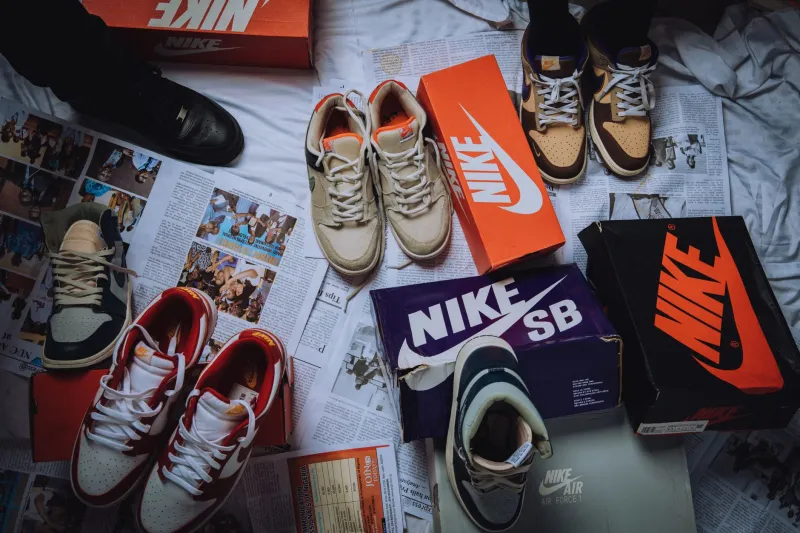
There's a moment every serious Yeezy collector knows. You've just landed a pair you've been hunting for months — maybe a Yeezy 700 Wave Runner in clean condition, or a Boost 350 V2 in a colorway that's been creeping up on StockX for two years. You get home, you open the box, you set them down on the shelf. And then you look around at the rest of your collection and realize: this isn't just a hobby anymore. This is a storage problem.
For a growing number of collectors across the US, the question of where and how to keep Yeezys has evolved into something way more complicated than stacking boxes in a closet. The infrastructure around collecting — the shelving, the cases, the humidity monitors, the off-site facilities — has become a full sub-category of the lifestyle. And it's costing people real money.
The Problem With Just Stacking Boxes
Let's be honest about what a shoebox actually is: a thin cardboard rectangle with zero climate control, zero UV protection, and a structural integrity that degrades the moment you stack three pairs on top of it. For casual collectors holding a few pairs, that's probably fine. But when your collection hits twenty, thirty, fifty pairs — especially pairs with real resale value — the box-stacking approach starts to feel genuinely reckless.
Boost foam, the cushioning technology that made the 350 and 700 families famous, is particularly vulnerable over time. Heat accelerates oxidation. Humidity invites mold. UV exposure fades colorways. And crease damage from improper storage can turn a near-deadstock pair into a beater in a matter of years without the owner ever touching them.
Marcus T., a collector based in Phoenix who runs a personal archive of over sixty pairs, put it bluntly: "I lost a pair of Static Reflectives to heat damage because I kept them near a window. Didn't even think about it. That was a $400 lesson and honestly it changed how I think about every pair I own."
The Home Display Arms Race
Walk into the dedicated sneaker rooms of serious collectors on Instagram or YouTube and you'll notice a consistent upgrade cycle happening. Basic IKEA Detolfs gave way to custom acrylic cases. Wall-mounted floating shelves gave way to backlit display systems with individual compartments. Now, the top tier of the home-display market involves modular units with built-in UV-filtering panels, adjustable humidity trays, and even integrated LED lighting systems designed to show off colorways without fading them.
Brands like Crep Protect, Sneaker Lab, and a handful of boutique manufacturers have noticed. The market for sneaker-specific storage and display products has expanded significantly over the last three years, with options ranging from $30 silica gel packs to $2,000+ custom display walls. For Yeezy collectors specifically, the investment calculus isn't crazy — if a single pair is worth $600 on the secondary market, spending $150 on a proper case to protect it is basically just basic asset management.
That said, home display comes with real trade-offs. Light, even filtered light, does cumulative damage over years. Temperature fluctuations in most homes — especially in climates like Texas or Florida — are hard to fully control without dedicated HVAC modifications. And for collectors in smaller apartments, the physical space required for a serious display setup is a genuine constraint.
Off-Site Storage: The Controversial Option
A smaller but growing segment of high-volume collectors has started moving pairs off-site entirely, using climate-controlled storage facilities originally designed for wine, art, or pharmaceutical inventory. These aren't your standard public storage units — they maintain consistent temperatures (typically 55–70°F) and humidity levels (around 45–55% relative humidity), conditions that are genuinely optimal for preserving Boost foam and knit uppers.
The cost isn't trivial. Dedicated climate-controlled storage in major US metros runs anywhere from $80 to $300+ per month depending on unit size and location. For collectors holding pairs purely as investment vehicles, the math can work out — especially if the appreciation on the collection outpaces the storage cost. But it raises an obvious question: at what point does a shoe collection stop being a collection and start being a portfolio?
Jordan K., a reseller in Atlanta who uses off-site storage for his highest-value inventory, sees it purely as operational: "I'm not keeping those pairs at home. Too much risk — fire, theft, humidity spikes in the summer. If I'm sitting on $15,000 worth of inventory, a $150 storage bill is just cost of doing business."
For collectors who actually love their shoes and want to see them, though, off-site storage can feel like a strange kind of defeat. What's the point of owning something beautiful if it's locked in a temperature-regulated box somewhere in an industrial park?
The Minimalist Pushback
Not everyone is buying into the infrastructure arms race. A vocal subset of the collector community has started pushing back against the idea that more storage investment equals better collecting. The argument goes something like this: if you're spending more time worrying about your display system than actually engaging with sneaker culture, you've lost the thread.
Derek M., a Chicago collector who's been in the Yeezy space since the original Adidas releases, keeps his collection deliberately small and deliberately accessible. "I've got maybe fifteen pairs. They're in good boxes, they're in a cool closet, and I can grab any of them whenever I want. I don't want a museum. I want a collection I actually interact with."
There's something to that. The collector who has every pair sealed behind acrylic, climate-monitored, and photographed for insurance purposes is operating in a fundamentally different headspace than the person who built their collection because they genuinely love the shoes. Neither approach is wrong, but the gap between them is getting wider as the investment stakes rise.
What This Actually Costs
If you're trying to figure out what a serious preservation setup actually runs, here's a rough breakdown for a mid-size collection of 30–50 pairs:
- Basic modular shelving with acrylic fronts: $300–$800
- UV-filtering display cases (per unit): $80–$200
- Silica gel packs and humidity monitors: $50–$150
- Shoe trees for unworn pairs (optional but recommended): $10–$25 per pair
- Off-site climate storage (monthly): $100–$250
- Insurance rider for collectibles: Varies significantly, but budget $200–$500/year for mid-value collections
The point isn't that you need all of this. The point is that the infrastructure question is real, and ignoring it has a cost too — it just shows up later, in damaged pairs and depreciated resale value.
The Bigger Picture
The emergence of a serious storage and display market around Yeezy collecting says something interesting about where the hobby has gone. These shoes started as something people wore — to the club, to the court, to the office. Now a meaningful portion of the rarest pairs will never touch pavement. They'll live in controlled environments, photographed and catalogued, appreciated as objects rather than footwear.
That's not necessarily bad. Art gets preserved. Vintage cars get garaged. The instinct to protect things of value is pretty human. But it does mean that the full cost of being a serious Yeezy collector now includes infrastructure — and anyone getting into the game should factor that in before they start stacking boxes.