Not All Collabs Age the Same: A Practical Framework for Evaluating Yeezy Partnership Drops
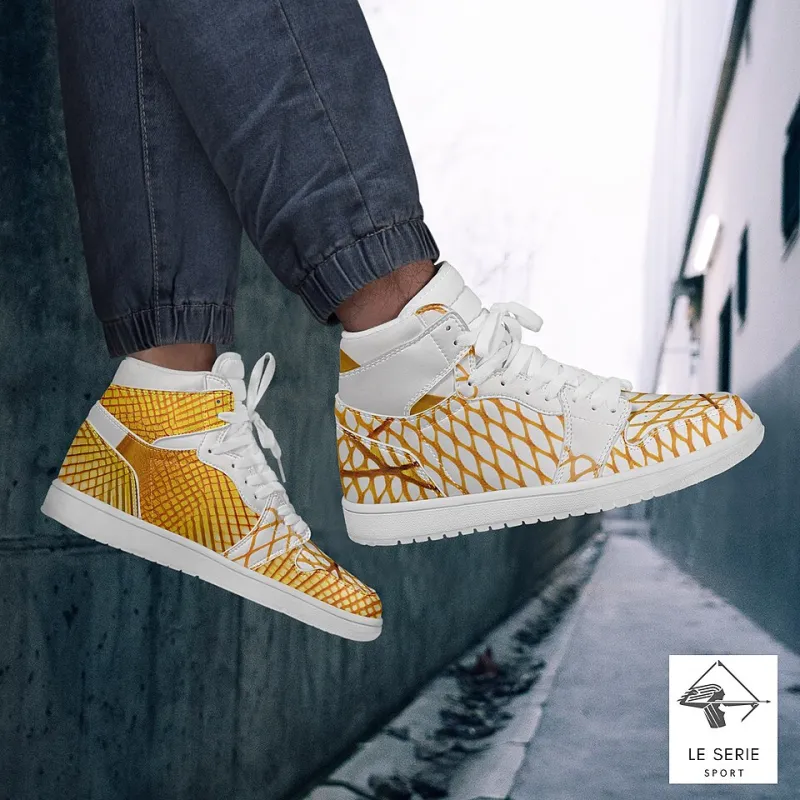
Photo: Dlorenzo1969, CC BY-SA 4.0, via Wikimedia Commons
Every limited-edition Yeezy collaboration arrives with its own hype infrastructure — the cryptic social media teasers, the influencer seeding, the deliberate scarcity engineering. And every single time, the same question sits underneath all of that noise: is this actually going to matter in five years, or is it going to be one of those releases that fills up discount bins and "should I sell?" forum threads?
The honest answer is that most collabs don't age well. The ones that do have specific, identifiable characteristics that you can actually evaluate at launch — if you know what to look for. This isn't about predicting the future with certainty. It's about building a sharper lens for separating signal from hype at the moment it matters most: before you spend the money.
Why Most Collabs Fade
Before getting into what makes a collab last, it's worth understanding why so many don't. The structural problem is that hype and value are genuinely different things, and the sneaker industry has become extremely good at manufacturing one while delivering the other.
A collaboration can generate massive launch-day demand based entirely on factors that have nothing to do with the shoe itself: the partner's current cultural moment, a well-executed PR campaign, artificial supply restriction. When those external factors fade — and they always do — what's left is just the object. If the object isn't interesting enough to stand on its own, the value drains out fast.
This is the core trap. Collectors who buy into hype without evaluating the underlying product are essentially betting on a media cycle, not a shoe. Media cycles are short. Good design isn't.
The Four Factors That Determine Collab Longevity
1. Design Novelty vs. Design Gimmick
This is the most important variable and the hardest to evaluate objectively in the moment. The question isn't whether the collab looks cool — it's whether it introduces something genuinely new to the Yeezy design language or just applies a recognizable aesthetic to an existing silhouette.
Collabs that age well tend to push the base silhouette into territory it hasn't occupied before. They change the material story, introduce an unexpected construction technique, or reframe the colorway logic in a way that feels like a real creative contribution rather than a branding exercise.
Collabs that fade tend to be additive rather than transformative — a logo placement, a palette swap, a co-branding moment that reads more as marketing than design. These can generate strong launch-day numbers but rarely develop the kind of collector reverence that sustains long-term value.
2. The Partner's Cultural Staying Power
When evaluating a Yeezy collab partner, the question isn't how hot they are right now — it's whether their cultural relevance has depth and staying power. There's a meaningful difference between a partner who represents a genuine creative movement and one who's simply having a moment.
The most durable collabs in sneaker history tend to involve partners who have established a body of work that transcends trend cycles — artists, designers, or institutions with a track record that predates the collab and will outlast it. When you're evaluating a new partnership, ask: will people still know and care about this collaborator in ten years? If the honest answer is "probably not," that's a significant risk factor for long-term value.
3. Scarcity Structure
Not all scarcity is created equal. There's a meaningful difference between a collab that's rare because it was genuinely limited in production and one that's rare because nobody wanted it. The former creates sustained demand; the latter creates the illusion of scarcity that evaporates the moment the hype cycle ends.
The scarcity question at launch is really about reading the distribution strategy. A collab released through a single retailer in a small run, with no restock history and a partner who's unlikely to revisit the collaboration, has structural scarcity baked in. A "limited" release that hits 200 retailers globally and gets restocked twice in the first month is not actually limited in any meaningful sense, regardless of how it's marketed.
4. Narrative Coherence
This one is subtle but surprisingly predictive. The best Yeezy collabs tell a story that makes sense — there's a legible reason why these two creative entities came together, and the shoe itself reflects that logic. The narrative gives collectors something to attach meaning to, which is what transforms a product into a collectible.
Collabs that lack this coherence — where the partnership feels like a business arrangement rather than a creative alignment — tend to struggle to develop the kind of cultural story that sustains long-term collector interest. The shoe exists, people buy it, but there's nothing to talk about it in five years.
Applying the Framework: Past Collabs as Case Studies
Looking at the Yeezy collab history, the framework holds up reasonably well. The releases that have developed genuine grail status tend to score well across all four factors: they pushed design boundaries, involved partners with demonstrated cultural longevity, had genuine structural scarcity, and told a coherent creative story.
The ones that faded tend to fail on at least two of the four — usually design novelty and narrative coherence simultaneously. They were exciting at launch because of who was involved, but the shoe itself didn't have enough to say once the initial excitement wore off.
The Honest Caveat
No framework is going to nail this every time. The sneaker market has enough irrational actors, enough nostalgia-driven demand cycles, and enough unpredictable cultural moments that even the most analytically sound evaluation can get scrambled by something you didn't see coming.
What the framework does is shift the odds in your favor. Instead of making a $300-plus decision based primarily on hype and FOMO, you're making it based on factors that have a demonstrated relationship with long-term value. That's not certainty — but in a market as volatile as Yeezy resale, it's a meaningful edge.
Next time a collab drops and the hype machine kicks into gear, slow down for ten minutes. Run through the four factors. Ask the hard questions. The shoes that can answer them well are the ones worth chasing. The ones that can't? Let someone else hold those.