Here Today, Gone Tomorrow: The Yeezy Drops That Fell Off the Resale Map
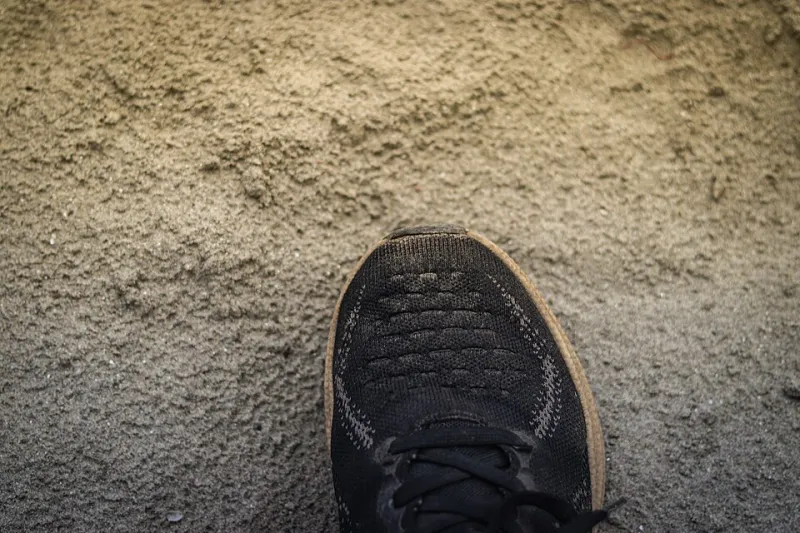
Photo: A S M Jobaer, CC BY-SA 4.0, via Wikimedia Commons
There's a version of the Yeezy story that gets told over and over—the one where every release is a cultural moment, every colorway a future grail, every StockX listing a slow climb toward legend status. That version is incomplete. Because for every Zebra or Triple White that holds its value through multiple restocks and half a decade of hype, there are releases that hit the secondary market hard and then just... disappear.
Not in a dramatic way. No headlines. No collector eulogies. They just stop showing up in feeds, stop moving on resale platforms, and eventually stop mattering to almost everyone. We're calling it the Yeezy graveyard—and it's bigger than most people want to admit.
The Anatomy of a Hype Collapse
To understand why certain drops fade, you have to understand how hype actually works in the sneaker market. Launch-day energy is a terrible predictor of long-term value. A shoe can generate massive social buzz, sell out instantly, and command 200% resale premiums in the first two weeks—and still be sitting at or below retail on StockX six months later.
The mechanics are pretty simple once you see them. Hype at launch is driven by scarcity and novelty. But if Adidas floods the market with a restock—or two, or three—that scarcity disappears fast. The Yeezy 350 V2 "Ash Blue" is a decent case study here. Strong initial sell-through, decent resale numbers early on, then a restock cadence that effectively crushed any premium the market was trying to build. By the time the dust settled, the shoe was trading near retail and most flippers had moved on.
But oversaturation is only one part of the story.
When Taste Moves Faster Than Inventory
Some drops don't fail because there are too many pairs—they fail because the culture moves on before the market can catch up. The Yeezy 500 "Enflame" is a good example of this dynamic. When it dropped, the chunky dad-shoe aesthetic was still riding high. By the time the secondary market had absorbed the initial wave of pairs, that silhouette had already started losing cultural relevance. Collectors who bought to flip were suddenly holding a shoe that nobody particularly wanted.
This is the difference between a trend and a movement. Yeezys at their most powerful represent something bigger than a colorway—they represent a cultural moment that people want to be attached to. When a release feels like it's chasing a trend rather than setting one, the market sniffs it out pretty quickly.
Talk to resale veterans long enough and you'll hear variations of the same observation: the drops that age well are the ones that felt inevitable in retrospect. The drops that fade are the ones that felt like they were trying too hard at the time.
What the Data Actually Shows
Pulling resale data across platforms like StockX, GOAT, and eBay for underperforming Yeezy releases reveals a consistent pattern. Most failed drops follow what you might call a cliff chart—strong initial volume in the first two to four weeks post-release, followed by a steep drop-off in both listing volume and sale price, and then a long, flat tail of near-retail or below-retail transactions.
Compare that to the slow-burn grails, which often show the opposite trajectory: modest early volume, steady price appreciation over six to eighteen months, and then a spike when cultural attention returns to the silhouette or colorway.
The Yeezy 700 "Inertia" and the 350 V2 "Citrin" both showed cliff-chart behavior. Neither is considered a grail today. Meanwhile, the 700 "Mauve" and the 350 V2 "Beluga 2.0" followed the slow-burn pattern and remain consistently liquid on secondary markets years after release.
The Forgotten vs. The Slow Burn
One distinction worth making: a shoe that disappears from resale isn't necessarily a bad shoe. Some of the most wearable Yeezys in the lineup are practically invisible on secondary markets—not because nobody wants them, but because the people who bought them actually wore them. Pairs that get used don't get listed. That's a different kind of market exit than a true flop.
The real graveyard residents are the pairs that nobody wanted enough to wear and nobody wanted enough to collect. They exist in a weird middle space—not iconic enough to be grails, not comfortable or accessible enough to be everyday beaters. They just kind of sit there, depreciating slowly, waiting for a cultural moment that never comes.
Collectors who've been in the game long enough have a name for these: shelf orphans. Pairs that looked good on paper, generated decent early buzz, and then found no permanent home in either the wearable or the collectable category.
What This Means If You're Buying Right Now
If you're making purchasing decisions based on launch hype alone, you're playing a risky game. The market has gotten more sophisticated over the past few years, and the window between a hyped drop and a collapsed premium has gotten shorter. Flippers who used to have six months to move pairs are now sometimes working with six weeks.
The smarter play—especially for newer collectors—is to focus on silhouette history and colorway positioning rather than launch-day social volume. Ask yourself whether a shoe is filling a gap in the lineup or competing with something that already exists and already has a loyal market. Ask whether the colorway feels like a natural extension of what Yeezy does well, or whether it feels like a marketing experiment.
And if you're sitting on pairs that have already started showing cliff-chart behavior? The graveyard is full of collectors who held too long waiting for a comeback that never came. Sometimes the right move is just to move on.