Sun, Snow, and Sellouts: How America's Climate Shapes What Yeezys Move When
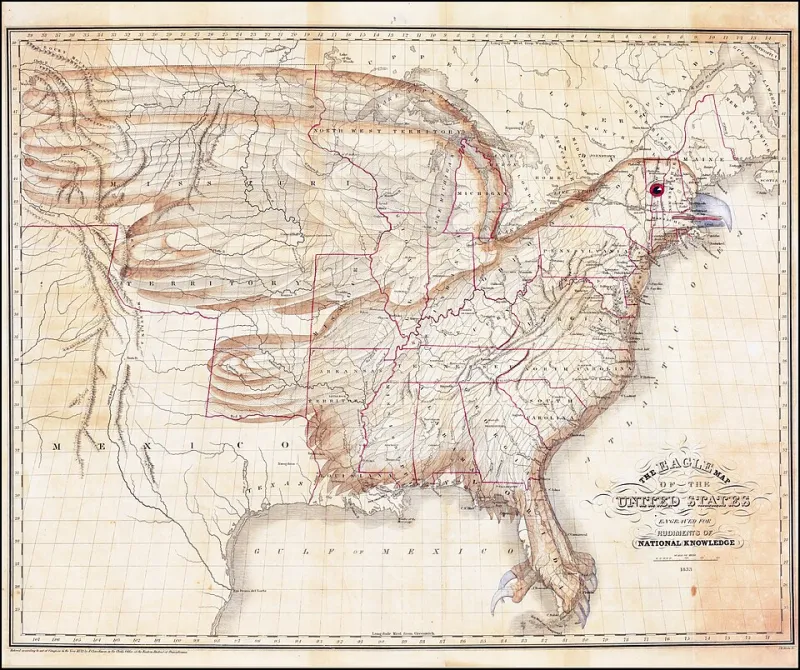
Photo: Isaac W. Moore (engraving) / Published by E. L. Carey & A. Hart, Philadelphia, Public domain, via Wikimedia Commons
Resale pricing gets talked about like it operates in a vacuum—supply, demand, cultural hype, restock risk. But spend enough time watching regional sell-through data and you start noticing something else entirely. The same pair of Yeezys can move fast in Miami in February and sit completely untouched in Minneapolis at the same time. The same colorway that's generating strong bids in Phoenix in July might be getting ignored in Seattle. Climate isn't just a backdrop to sneaker culture. For Yeezy collectors paying attention, it's actually a market signal.
Why Geography Matters More Than You Think
Sneakers are functional objects before they're cultural ones, and function is shaped by environment. A collector in Houston doesn't think about the same wearability factors as someone in Denver. The lifestyle context around a shoe—what you'd actually wear it with, in what conditions, during what activities—changes dramatically across US regions, and those practical considerations shape demand in ways that don't always show up in the national-level data.
The Yeezy lineup spans a pretty wide range of silhouettes and materials. Primeknit uppers, neoprene-adjacent fabrics, suede panels, and foam midsoles all perform differently in different climates. Collectors and buyers in wet climates think about that. People in desert climates think about UV exposure and color fading. Cold-weather markets think about insulation and grip. These aren't abstract concerns—they affect which shoes people actually want to own and wear, which in turn affects regional demand.
The Winter Surge in Cold-Weather Markets
Let's start with what's probably the most consistent pattern in the data: the late-fall and early-winter demand spike for bulkier Yeezy silhouettes in cold-weather markets across the Northeast, Midwest, and Mountain West.
The Yeezy 500, Yeezy 700, and Yeezy Foam Runner all see measurable upticks in regional search volume and secondary market activity in markets like Chicago, New York, Boston, and Denver between October and January. The 700 in particular benefits from its chunkier profile and more enclosed construction—it reads as a cold-weather shoe in a way that the slimmer 350 V2 doesn't.
For collectors in these markets, the implication is pretty clear: if you're looking to buy 700s or 500s for personal use, summer is your window. Demand is lower, competition is lighter, and sellers in warm-weather markets who have no seasonal use for the silhouette are more motivated. If you're looking to sell those same pairs, the fall ramp-up is when you want your listings live.
The Warm-Weather Colorway Effect
On the flip side, lighter colorways and more breathable silhouettes show consistent regional demand spikes tied to warmer months and warmer climates. The 350 V2 in lighter earth tones—think "Bone," "Linen," or "Israfil"—tends to see stronger search and transaction activity in Sun Belt markets like Atlanta, Dallas, Phoenix, and Los Angeles during spring and early summer.
There's also a color psychology dimension here that's worth noting. Collectors in perpetually sunny climates tend to gravitate toward colorways that work visually in bright outdoor settings. Muted, dusty tones and light neutrals photograph well in direct sunlight. Darker, more saturated colorways that look great in overcast Pacific Northwest light can feel visually heavy in the Texas heat. These are subtle factors, but they show up in regional preference data.
The Foam Runner is probably the clearest example of a silhouette with strong climate-driven demand patterns. It's a warm-weather shoe almost by definition—the construction doesn't work well in cold or wet conditions, and the aesthetic is deeply tied to beach and outdoor lifestyle contexts. Florida, Southern California, and coastal Texas markets show disproportionately strong Foam Runner activity compared to the national average, and that activity peaks hard between April and September.
The Pacific Northwest Anomaly
Seattle and Portland deserve their own mention because they behave differently from most US markets in ways that are interesting for collectors to understand. The Pacific Northwest has a strong sneaker culture, a high concentration of fashion-forward consumers, and a climate that's wet and mild for most of the year rather than cold in the traditional sense.
This creates demand patterns that don't map cleanly onto the cold-weather/warm-weather binary. Waterproof and weather-resistant silhouettes perform well year-round. Earth tones and muted colorways that might feel out of place in sunnier markets look completely at home against the grey-green backdrop of Pacific Northwest street style. The 350 V2 in darker colorways—"Cinder," "Carbon"—shows above-average sell-through rates in these markets relative to national averages.
If you're a collector in Seattle or Portland, you're also potentially sitting on a supply advantage for warm-weather silhouettes. Foam Runners and lighter 350 colorways that don't move as quickly locally during the long rainy season can sometimes be acquired at more favorable prices, then moved to Sun Belt buyers through national resale platforms when demand is peaking there.
Timing Your Transactions Around the Calendar
Putting this all together into a practical framework: the basic principle is to buy where and when demand is seasonally low and sell into markets where demand is seasonally high. That's not a new concept in commodities trading, but it's underutilized in sneaker resale.
A few specific patterns worth building into your buying and selling calendar:
Buy bulkier silhouettes in warm-weather markets during summer. Sellers in Phoenix and Miami aren't thinking about 700s in July. Their listings sit longer, and motivated sellers drop prices.
List warm-weather colorways for Sun Belt buyers in early spring. The demand surge in Southern markets starts earlier than most people expect—late February and March are often better windows than May.
Watch Pacific Northwest markets for undervalued warm-weather inventory. Longer wet seasons mean longer periods of suppressed local demand for breathable silhouettes.
Time Northeast and Midwest listings for the October window. That's when cold-weather demand starts building but before the holiday gifting surge fully inflates prices.
None of this is a guaranteed formula—hype cycles, restocks, and cultural moments can override seasonal patterns in a hurry. But for collectors who are thinking about their buying and selling decisions with any kind of strategic framework, climate is a real variable. The map of America isn't uniform, and neither is the market.