Wear Them or Wall Them? The Argument Tearing Yeezy Collectors Apart
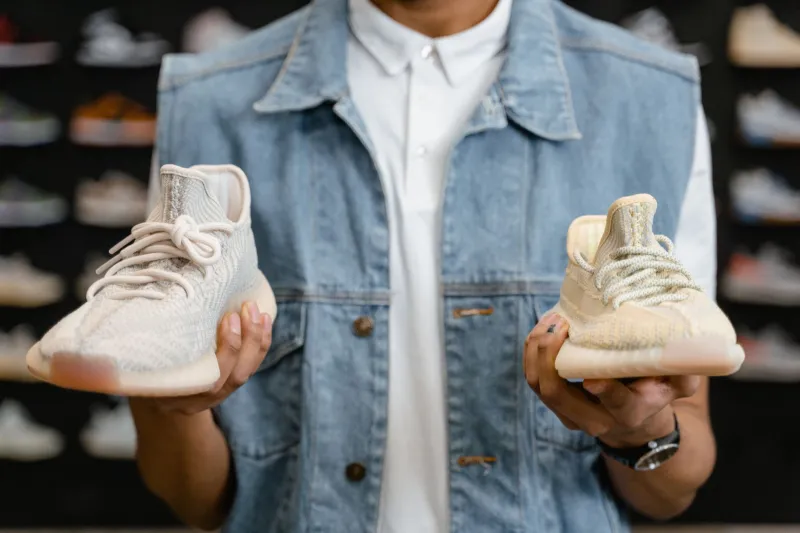
Somewhere in America right now, there's a collector looking at a pair of Yeezy 350 V2s — pristine, deadstock, tags intact, tissue paper still folded the way it came from the factory — and wrestling with a question that sounds simple but really isn't: should I wear these?
This isn't a new debate. Sneaker culture has been having some version of it for decades. But Yeezy has sharpened the argument considerably, because the stakes are higher, the community is more visible, and social media has turned every decision about a rare pair into a kind of public statement about who you are and what you believe collecting is actually for.
The Case for the Vault
Let's start with the preservationists, because their argument is at least partly grounded in financial reality.
Worn Yeezys are worth less. This is not really debatable. A pair of Yeezy Boost 350 V2 Zebras in deadstock condition with the original box commands a meaningfully higher price on the secondary market than the same pair with even light wear. Depending on the model and current demand, the deadstock premium can range from 15% to 50% or more. For collectors holding pairs as appreciating assets, wearing them isn't just a lifestyle choice — it's a financial decision with real consequences.
Beyond the numbers, there's a preservation argument that doesn't depend on resale value at all. Some collectors genuinely view rare Yeezys as cultural artifacts — objects that document a specific moment in the intersection of music, fashion, and sneaker history. The argument goes: you wouldn't write in a first-edition book or drive a vintage Ferrari daily. Why is a rare sneaker different?
Tyler R., a collector in Seattle with a deadstock archive going back to 2015, frames it this way: "These shoes are documents. The first Yeezy Season releases, the early Boost 750s — there are pairs out there that are genuinely irreplaceable. If I wear them, that document gets damaged. I'm not preserving them for me, I'm preserving them for the culture."
It's a sincere position, and it's not as precious as it sounds when you consider that museum-quality sneaker collections do exist and do carry cultural value beyond their owner's personal enjoyment.
The Case for Lacing Up
The wearers have a different kind of sincerity, and honestly, it's harder to dismiss than the preservationist crowd sometimes wants to admit.
Kanye West designed Yeezys to be worn. The entire origin story of the line — the vision of making premium design accessible, of getting people out of the Jordan hype cycle and into something that felt genuinely different — is rooted in the idea of footwear as lived experience. The Boost cushioning, the primeknit fit, the way the 350 V2 actually feels on your foot: these aren't incidental features. They're the point.
There's something philosophically uncomfortable about a collector community that has taken a line built on accessibility and democratization and converted it into a series of sealed objects that most people will never interact with. The shoes become symbols of ownership rather than expressions of the design vision that made them meaningful in the first place.
Marcellus W., a Chicago collector who makes a point of wearing everything he buys, puts it directly: "If I'm not wearing them, I'm not really a collector. I'm a storage facility. These shoes were made to move. Keeping them in a box forever isn't honoring them — it's just hoarding."
There's also a community dimension here. Wearing rare pairs — especially in contexts where other collectors can see and appreciate them — contributes to the living culture around Yeezy in ways that sealed boxes in a climate-controlled room simply don't. The person rocking Wave Runners at a sneaker convention is participating in something. The person photographing their deadstock collection for Instagram is... doing something else.
How Social Media Broke the Debate
Here's where things get genuinely complicated: social media has turned this philosophical disagreement into a performance sport, and neither side comes out of it looking entirely great.
The deadstock crowd has developed an aesthetic around preservation that is, at this point, its own kind of flex. The pristine flat-lay, the box-and-tissue setup, the dust-bag-on-the-shoe content — it's all become a visual language that signals status through restraint. "Look what I have and don't touch." There's a certain gatekeeping energy to it that sits uneasily with the accessible, anti-elitist origins of the Yeezy brand.
But the wearers aren't entirely innocent either. The performative destruction of rare pairs — the "I wear my Zebras to the gym" content, the intentionally crease-heavy flex — has its own kind of posturing. It's conspicuous consumption dressed up as authenticity. Damaging a $400 shoe to prove you're not precious about $400 shoes is its own form of showing off.
Social media has essentially taken a genuine philosophical tension and converted it into content, which means both positions have been hollowed out somewhat by the incentive to perform them rather than actually hold them.
The Resale Reality Check
For anyone navigating this debate with real money involved, there are some practical considerations worth separating from the ideology.
Not every Yeezy is precious enough to justify the deadstock premium anxiety. The 350 V2 in widely-released colorways — Cream White, Black, Beluga 2.0 — has been produced in quantities large enough that worn pairs don't suffer dramatic resale penalties. The calculus is different for genuinely limited releases, early-era pairs, or models that have been discontinued and are actively appreciating.
A useful mental framework: if a pair's current resale value is within 20% of what you paid, the deadstock premium probably isn't worth the lifestyle sacrifice. If a pair has doubled or tripled in value since purchase, the financial argument for preservation gets much stronger.
Also worth noting: the condition grading systems used by major resale platforms (StockX's condition tiers, GOAT's authentication and grading process) have made the worn/unworn distinction more legible and more financially consequential than it used to be. A "9/10" pair on GOAT is a real category with real pricing implications — it's not just collector mythology.
What This Is Really About
Strip away the social media performance and the financial calculations, and the deadstock-versus-wear debate is really a question about what collecting is for.
If collecting is about investment and preservation, deadstock makes sense. If collecting is about participation in a living culture, wearing makes sense. If it's about personal enjoyment — the private pleasure of owning something beautiful and rare — then honestly, it doesn't matter what you do with them as long as you're not lying to yourself about it.
The uncomfortable truth is that Yeezy culture has become big enough and financially significant enough that these motivations rarely exist in pure form. Most serious collectors are doing all of these things simultaneously, in different proportions, with different pairs. The person who wears their common colorways and vaults their limited releases isn't being inconsistent — they're being honest about a hobby that contains multitudes.
There probably isn't a right answer. But there's definitely a wrong one: making the decision based on what looks best on Instagram rather than what you actually believe. The shoes deserve better than that, and so do you.