What's Really in the Box: Inside the Personal Yeezy Archives of America's Most Dedicated Collectors
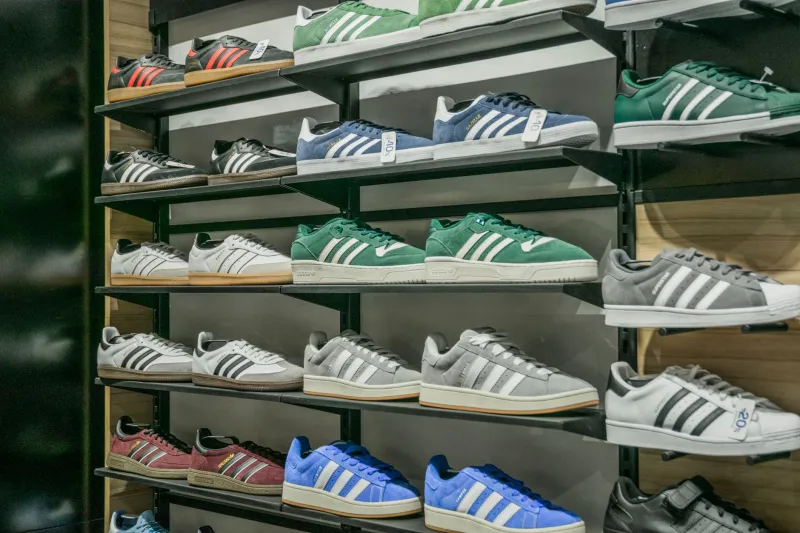
There's a guy in Chicago — we'll call him Marcus — who hasn't worn a pair of shoes in three years without photographing the box first. Not the shoes. The box. Because Marcus knows something a lot of casual buyers don't: condition documentation is the difference between resale gold and a listing that sits on StockX for four months with zero offers.
Marcus is one of five collectors we spoke to for this piece. They live in different cities, come from different financial situations, and got into Yeezys through completely different doors. But they all share one thing — a level of dedication to their collections that most people would call obsessive. They'd probably just call it smart.
The Collector Who Treats It Like a Portfolio
Danielle, a 34-year-old financial analyst based in New York City, started buying Yeezys in 2016. She owns 47 pairs, all stored in a humidity-controlled unit she rents in Long Island City. She keeps a spreadsheet — updated monthly — that tracks purchase price, current market value, wear status, and projected depreciation curves.
"I'm not sentimental about it," she says over the phone, sounding almost apologetic. "I love the shoes, genuinely. But I also know that sentiment is how people end up with $8,000 worth of Yeezys that they could never actually sell for $8,000."
Her most valuable pair? An unworn set of Yeezy Boost 350 V1 Turtledoves, purchased at retail in 2015. She estimates their current value somewhere north of $1,500 depending on the platform. Her least valuable? A pair of Yeezy Slides she bought on impulse during a restock and admits she "just kind of hates."
Danielle's approach is clinical, but it works. She's turned a portion of her collection over every two years, rotating out pairs whose value has plateaued and reinvesting in deadstock with stronger long-term upside. It's a strategy she borrowed directly from equity investing, and she's not shy about saying so.
The Guy Who Got in Early and Never Left
Marcus, the Chicagoan with the box-photography habit, has been collecting since the very beginning. He copped his first pair of Yeezy Boosts at a Foot Locker in 2015, camping out the night before with his cousin. He still has them. He also has 61 other pairs stacked across two bedroom closets, a storage shelf in his basement, and one very patient girlfriend.
"She gets it," he says with a laugh. "Mostly. She's got her own section of the closet that I'm not allowed to touch."
What makes Marcus's collection genuinely interesting isn't just the size — it's the breadth. He's got early 350 V1s sitting next to 700 Wave Runners, 380s, Foam Runners, and a couple of the more obscure apparel pieces that most people have already forgotten existed. He calls it a "timeline collection" and means it literally: you could walk through his archive and reconstruct the trajectory of the entire Yeezy brand from its early Adidas partnership days through the chaos of 2022 and beyond.
"People sleep on having the full story," he says. "Everybody wants the grails. But the context is what makes the grails mean something."
When the Collection Becomes a Cautionary Tale
Not every archive we visited was a triumph. We spoke to Trevor, a 29-year-old from suburban Phoenix, who built his collection during the height of hype culture — buying heavily during 2019 and 2020, often at significant resale premiums — and has since come to terms with the fact that a meaningful chunk of it isn't worth what he paid.
"I bought into the idea that everything Yeezy was going to hold value forever," he admits. "And then the brand flooded the market, and then the whole Kanye situation happened, and I'm sitting here with a bunch of pairs I overpaid for that I can't move."
Trevor's situation isn't unique. The 2022 Adidas split and the subsequent mass restock of previously rare colorways hit a lot of mid-tier collections hard. Pairs that had been sitting comfortably above retail suddenly found themselves trading at or below it. For collectors who bought at peak resale prices, that math stings.
His advice to newer collectors is blunt: "Don't buy hype. Buy scarcity. And know the difference."
The Archivist Who Doesn't Care About the Money
Then there's Sofia, a 41-year-old graphic designer in Los Angeles, who represents a genuinely different kind of collector. She owns 28 pairs, none of which she has any intention of selling. Ever.
"These are cultural artifacts to me," she explains. "I'm not trying to flip anything. I'm trying to preserve something."
Sofia's collection is organized by year and silhouette, photographed against consistent backgrounds, and catalogued with notes about the cultural moment each release represented. She talks about the 350 V2 Zebra the way a museum curator might discuss a first-edition print — not in terms of dollar value, but in terms of what it meant when it dropped, who was talking about it, and what it represented in the broader conversation about streetwear and mainstream fashion.
"Yeezy changed how the whole industry thought about sneakers," she says. "That's worth documenting. That's worth taking seriously."
Her collection might not be the most financially optimized, but it's arguably the most coherent. There's a logic to it that goes beyond market value, and honestly, spending time with Sofia makes you think about why you got into this stuff in the first place.
What Actually Makes a Collection Valuable
After talking to all five collectors, a few things became clear about what separates the vaults worth something from the ones that are just expensive nostalgia traps.
Condition is everything. Unworn, original-lace, box-included pairs hold value in ways that lightly worn or missing-box pairs simply don't. Sounds obvious, but plenty of collectors have worn shoes they shouldn't have.
Scarcity beats hype. The pairs that were actually hard to get — limited regional releases, early V1 silhouettes, pre-split deadstock — have held up better than the mass-restocked colorways that flooded the market post-2022.
Documentation matters more than you think. Receipts, photos, purchase history, original packaging — these aren't just organizational habits. They're proof of authenticity and provenance, and they matter enormously when it comes time to sell.
Know why you're collecting. The collectors who seem happiest — and whose archives seem most coherent — are the ones who were honest with themselves from the start about whether they were building a portfolio, a personal archive, or something in between. Confusion about that leads to the Trevor situation.
Marcus, still in Chicago, is already thinking about what his collection will look like in another ten years. "Yeezy is a chapter in sneaker history that isn't over yet," he says. "I want to have the whole chapter when it is."
That's either the most collector thing anyone has ever said, or genuinely the wisest. Probably both.