How Yeezy Kicked Down the Door That High Fashion Forgot to Lock
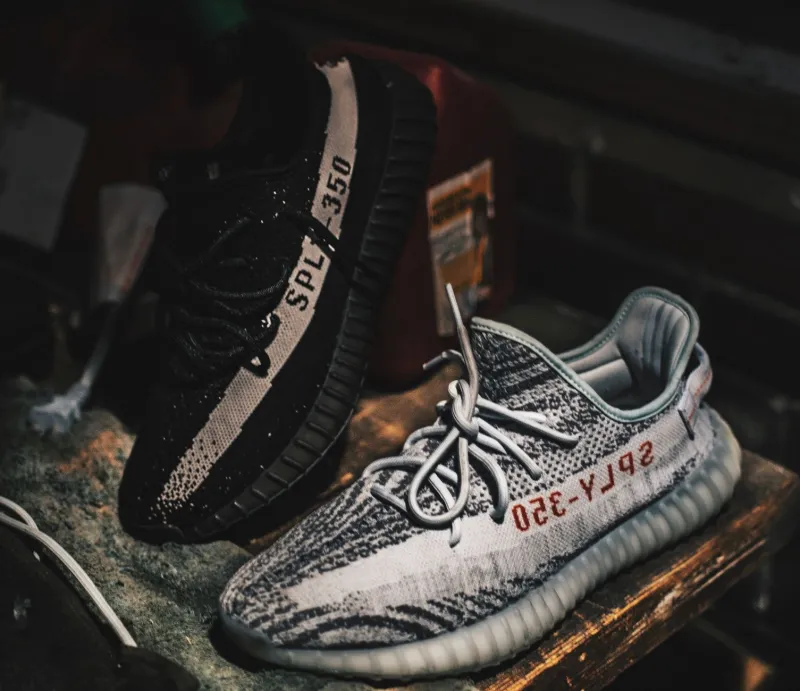
There's a version of history where luxury fashion houses just... kept doing what they were doing. Loafers. Oxfords. The occasional sleek leather sneaker that cost $800 and looked like it belonged in a boardroom. The sneaker world existed over there, in its own lane, and the fashion establishment was more than happy to let it stay that way.
Then Kanye West dropped the Yeezy 350, and that clean separation started looking a lot more like a fault line.
The Old Rules Were Real — Until They Weren't
Let's be honest about what the fashion world looked like before Yeezy really hit its stride. Heritage mattered. Provenance mattered. If you wanted a sneaker to be taken seriously in elevated circles, it needed either a decades-long athletic legacy (think Nike Air Max or the Converse Chuck) or a co-sign from someone with a Paris atelier and a lot of runway shows under their belt.
Kanye had neither. What he had was an obsessive design sensibility, a willingness to alienate people, and a partnership with Adidas that gave him the kind of creative latitude that most athletes and musicians could only dream about. The Yeezy 350 v1 in 2015 didn't look like anything that had come before it. It was sock-like. It was low-profile. It was made from Primeknit, which at the time felt more like athletic gear than fashion-forward footwear. And it sold out in minutes.
That sellout wasn't just a supply-and-demand story. It was a signal.
When Resale Prices Started Doing the Talking
The secondary market picked up on what the fashion press was slow to acknowledge. Early Yeezy 350s were flipping for two, three, sometimes four times retail within days of release. This was happening not because of some storied heritage or because Vogue had blessed them — it was happening because people wanted them badly enough to pay whatever it took.
Sneaker collectors who were around during those early drops remember the energy. "There was this feeling like the rules had changed overnight," says Marcus D., a Dallas-based collector who has been in the game since the mid-2000s. "Before Yeezy, you knew what made a sneaker valuable. Air Jordans had history. Nikes had athletes. Yeezy had... Kanye's vision. And somehow that was enough. Actually, it was more than enough."
That 'more than enough' part is the key. Because it didn't take long for the luxury world to notice that a sneaker with no athletic heritage and a silhouette that broke basically every traditional proportion rule was commanding prices — and cultural attention — that rivaled their own product lines.
The Ripple Effect Through Fashion's Upper Floors
Balenciaga's Triple S dropped in 2017. It was ugly by conventional standards — deliberately, aggressively ugly — and it became one of the most talked-about luxury items of the decade. Coincidence? Designers and industry insiders have been pretty open about the fact that Yeezy's success proved there was an appetite for footwear that didn't play by the old aesthetic rules.
Gucci started leaning harder into sneakers. Louis Vuitton, under Virgil Abloh — himself deeply connected to Kanye's creative orbit — began treating sneakers as legitimate luxury artifacts rather than casual afterthoughts. The whole framework of what a high-fashion house was supposed to do started bending.
"Yeezy essentially gave luxury brands permission to get weird," explains Jordan T., a sneaker historian based in New York who consults for several collector communities. "Before that inflection point, a major fashion house putting out a chunky, awkward sneaker at a high price point would have been seen as a misstep. After Yeezy proved the market existed? It became a strategy."
Nike felt it too, though the relationship there is thornier. Kanye famously left Nike for Adidas after feeling creatively constrained, and the success of Yeezy had to sting — not just commercially, but symbolically. Nike responded by doubling down on its own celebrity collaborations and limited-release strategy, leaning into scarcity and hype in ways that looked a lot like what Yeezy had pioneered.
The Pricing Conversation Nobody Wanted to Have
One of the quieter disruptions Yeezy caused was around price positioning. The original Yeezy 350 retailed around $200 — not cheap, but not luxury-tier either. Yet the resale market treated it like it was. That gap between retail price and perceived value was something the fashion industry had to reckon with.
If a $200 sneaker could command the same cultural cachet as a $1,200 luxury item, what did that say about how prestige was actually being constructed? The answer, uncomfortable as it was for some established brands, was that scarcity and cultural relevance were doing the heavy lifting — not the price tag itself.
Luxury houses took note and started applying similar logic: tighter drops, more exclusive releases, collaborations with cultural figures who brought their own built-in audiences. The playbook Yeezy wrote didn't stay proprietary for long.
What Collectors Actually Think About All of This
Talk to serious Yeezy collectors and you get a nuanced take. There's pride in having recognized the cultural weight of the line early — in having copped a v1 350 at retail or snagged an early Pirate Black before the world caught on. But there's also a wariness about what the mainstreaming of Yeezy's influence actually meant for the culture.
"When luxury brands started doing the chunky shoe thing, it felt like validation, but it also felt like the thing we loved was getting absorbed," says Priya S., a Chicago-based collector with over 60 pairs. "Yeezy was disruptive because it didn't fit anywhere. Once everything started looking like Yeezy, it fit everywhere. Which is kind of the opposite of what made it special."
That tension — between influence and dilution — is real. Yeezy's design DNA is now so embedded in the broader fashion landscape that it's sometimes hard to see where the original ends and the imitation begins.
The Legacy Is Messy, But It's Undeniable
Setting aside everything that's happened with Kanye West's public life — and there's a lot to set aside — the design and market legacy of Yeezy on high fashion is genuinely hard to overstate. The line proved that a sneaker's value wasn't locked up in athletic history or fashion-house prestige. It could be built from vision, scarcity, cultural timing, and a designer willing to trust his instincts over conventional wisdom.
Luxury fashion didn't invite streetwear to the table. Yeezy just sat down anyway, and eventually everyone else had to rearrange their chairs.
For collectors, that history matters — not just as context, but as a reminder of why these shoes meant something beyond their resale price. They were proof of concept for a different kind of cultural authority. And that's worth remembering the next time you're pulling a pair out of the box.