Slept-On Droptops: The Yeezy Releases Nobody Wanted That Are Now Quietly Climbing
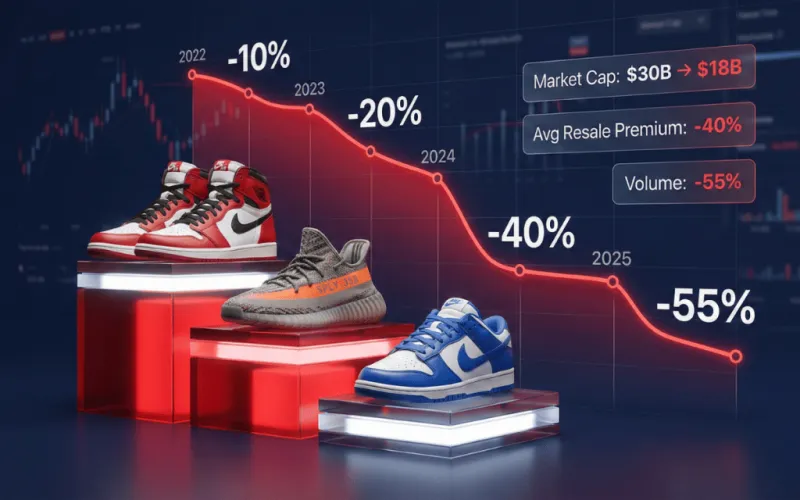
Photo: rare sneakers resale market data analytics price chart growth, via originalpricing.com
The Yeezy resale market has a short memory and a bad habit of overcorrecting. A drop lands, the hype machine decides within 48 hours whether it's a W or an L, and that verdict sticks — sometimes for years. But dig into the data a little deeper and you'll find a pattern that should make patient collectors pay close attention: some of the biggest losers at launch have quietly become some of the most interesting plays on the secondary market right now.
These are the sleeper grails. The pairs that got dunked on in Reddit threads, sat at retail long after release day, and got passed over by collectors chasing the next big thing. And some of them are now posting resale numbers that would make early dismissers wince.
The Anatomy of a Flop-to-Grail Arc
Before we get into specifics, it's worth understanding what actually causes a release to underperform at launch — and what reverses that trajectory later.
Launch-day flops usually come down to one of a few things: a colorway that feels off-trend at the moment of release, an oversupply that deflates the secondary market before it can build momentum, a drop that gets overshadowed by something else in the sneaker calendar, or simply a silhouette that the community hasn't warmed up to yet. None of those things are permanent conditions.
What changes? A few things. Scarcity creeps in as retail stock dries up and pairs get worn or lost to degradation. Aesthetic cycles turn — colorways that felt wrong in 2019 can feel exactly right in 2024. Cultural moments attach themselves to specific models in retrospect. And sometimes, a smaller community of genuine enthusiasts quietly accumulates pairs at low prices, creating a floor that eventually becomes a launch pad.
The Yeezy 700 V3: The Slow Burn
The 700 V3 is probably the clearest example of a release that the market initially rejected and has since reassessed. When it dropped, the reaction was lukewarm at best. The chunky dad-shoe aesthetic of the original 700 and 700 V2 had built a loyal following, but the V3's more angular, almost skeletal design felt divisive. No Boost cushioning — a point of serious contention — and a silhouette that looked like it was trying too hard to be futuristic.
Early resale prices barely cleared retail on most colorways. Some sat below retail for extended periods, which in the Yeezy world was practically unheard of at the time.
Fast forward to now, and the calculus has shifted. The V3's production run was relatively limited compared to the broader Yeezy catalog, and the design — once seen as too weird — now reads as genuinely distinctive in a market flooded with similar-looking runners. Certain V3 colorways have seen meaningful resale appreciation, particularly the Azael and Alvah releases, which now trade at multiples of their original retail price.
The Yeezy Foam Runner: Meme to Mainstream
Few Yeezy releases got clowned harder at launch than the Foam Runner. The internet had a field day. "Crocs for people who think they're too cool for Crocs" was one of the kinder takes. The silhouette was polarizing in a way that felt almost intentional — alien-shaped, made from algae-based foam, with a price point that seemed audacious for what many dismissed as a novelty item.
But here's what happened: the Foam Runner found its people. Slowly, then all at once. The silhouette's sculptural weirdness started reading as genuinely avant-garde rather than just goofy. Fashion-forward consumers who weren't traditional sneakerheads latched onto it. Certain colorways — particularly the MXT Moon Gray and the Pure Oat — became legitimately hard to find at retail prices.
The Foam Runner is now a staple of the Yeezy lineup rather than a punchline, and early dismissers who passed on retail pickups are paying the premium on the secondary market.
What the Data Actually Shows
Looking at resale tracking data from platforms like StockX over multi-year windows, a clear pattern emerges: Yeezy releases that initially trade below or near retail but have low overall supply tend to appreciate on a longer timeline than high-hype drops that spike immediately. The spike-and-crash dynamic hits overproduced releases hardest. Quiet, undersupplied releases build value more slowly but more sustainably.
The implication for collectors is significant. Chasing every hyped drop at peak premium is a losing strategy for most. Identifying undersupplied releases that the market has mispriced — and holding them through the initial cold shoulder — is where the real opportunity lives.
Current Candidates Worth Watching
So which current releases might be tomorrow's sleeper grails? A few worth keeping an eye on:
The Yeezy 450 continues to divide opinion. The silhouette is aggressive and not universally loved, but its production numbers have been relatively controlled and the design is genuinely unlike anything else in the market. The collectors who love it, love it hard.
Certain 350 V2 colorways from the mass-release era that flooded the market and killed resale premiums may be due for reassessment. As those pairs get worn out of the broader pool, the surviving DS examples become scarcer than the current market suggests.
The Yeezy Slide in its earlier, more limited colorways deserves a second look. The mass-market versions depressed the whole line's cachet, but the earliest drops in specific colors are meaningfully rarer than they appear.
Patience Is the Actual Alpha
The collectors who are winning on sleeper grails aren't smarter than everyone else. They're just more patient and more skeptical of immediate consensus. The Yeezy market — like most markets — overreacts in both directions. The pair that gets written off as a flop on drop day is still the same shoe six months later. Sometimes the market catches up to what it missed. Sometimes it doesn't.
But the collectors who bought Foam Runners when they were a meme and held them through the jokes? They're laughing now, just for different reasons.